Bonding for Curly and Coily Hair: Repair Without Losing Your Pattern
In this article:
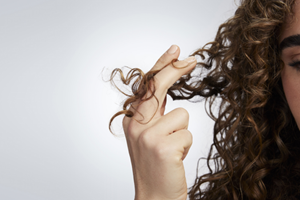
- Curly and coily hair is more vulnerable to bond damage because every bend is a stress point and the cuticle is naturally lifted.
- Damaged curls lose spring before they lose pigment: limp shape, inconsistent pattern from section to section and increased breakage at the bend points.
- Redken Science (protein + moisture + acidic pH 4.5–5.5) applies to textured hair, but the delivery format has to balance bond repair with the moisture curls need to coil cleanly.
- The Acidic Bonding Curls system pairs the Bonding Care Complex with avocado, coconut and camelina oils to reinforce bonds without weighing curls down.
Quick Answer
Curls have more disulfide bonds per strand and a naturally lifted cuticle, which makes them both more vulnerable to damage and more responsive to bond repair. The Acidic Bonding Curls system reinforces bonds while preserving moisture and pattern.
Most bond-building products were developed with straight hair in mind. The chemistry applies to every texture, but the delivery system matters. A formula that performs on fine, straight strands can leave 3B curls limp and 4C coils crunchy. Curl-specific bond repair solves for both: structural reinforcement anchored in Redken Science (protein + moisture + acidic pH 4.5–5.5), in a format that respects the curl pattern.
Why Curls Take Damage Differently
Curly and coily hair is structurally more vulnerable to bond damage than straight hair because every bend in the pattern is a concentrated stress point.
Straight strands have cuticle scales that lie flat, reflecting light and locking in moisture. Curly and coily strands have scales that raise slightly along each curve, which makes the cuticle naturally lifted. That elevated porosity is one reason textured hair absorbs water and product faster than straight hair, but the same trait accelerates chemical absorption during color or bleach services. Damage reaches the cortex faster and breaks more bonds in less processing time.
Three factors compound the vulnerability:
- More disulfide bonds per strand: the bonds are what create the curl shape itself, so curls carry a higher bond load to begin with.
- Higher structural stress at every bond: tension concentrates where the fiber turns, which is also where breakage concentrates.
- Elevated porosity: accelerates both damage and treatment absorption, so the right products work fast, and the wrong ones do harm fast.
How Damage Shows Up in the Pattern
Damage in curly and coily hair shows up as pattern loss before it shows up as color fade or surface dullness.
When disulfide bonds weaken inside a curly strand, the curl loses spring. Damaged curls become limp, stretched or inconsistent in pattern: one section coils tightly while the next barely waves. That uneven texture is the hallmark sign of bond damage on textured hair, and it precedes the more obvious signs of damaged hair (breakage, split ends, surface roughness) by weeks or months.
Bond repair restores the internal scaffolding that holds the curl shape. As weakened bonds reinforce, the strand regains its ability to coil back on itself. Curls bounce higher, spirals become more uniform and definition improves without additional styling intervention.
The Mistakes That Flatten Curls
Four common bond-building habits work against textured hair specifically. Each one is worth correcting before adding a single new product.
- Overusing protein-heavy treatments: Protein reinforces structure, but excess protein on curly hair produces stiffness and reduces elasticity. Curls need to stretch and bounce. Rigid, snap-prone strands are a sign of protein overload. Balance every protein-intensive treatment with a moisture-rich follow-up, and track how curls respond over the next two washes.
- Applying heavy leave-ins to soaking-wet hair: Waterlogged curls cannot absorb a leave-in effectively, and the combined weight of water and product stretches the curl pattern downward. Squeeze out excess water with a microfiber towel first, then apply to damp (not dripping) hair.
- Skipping the leave-in entirely: Curly hair needs moisture and slip between washes, and the bonding shampoo and conditioner alone do not deliver that. The leave-in continues bond repair while providing the hydration the pattern needs to clump and define.
- Brushing curls dry after a bond treatment: Bond treatments improve strength, not invincibility. Dry-brushing curly hair disrupts the pattern and causes breakage at the exact bend points the treatment is trying to protect. Detangle with fingers or a wide-tooth comb on conditioner-saturated hair only.
The Acidic Bonding Curls Routine
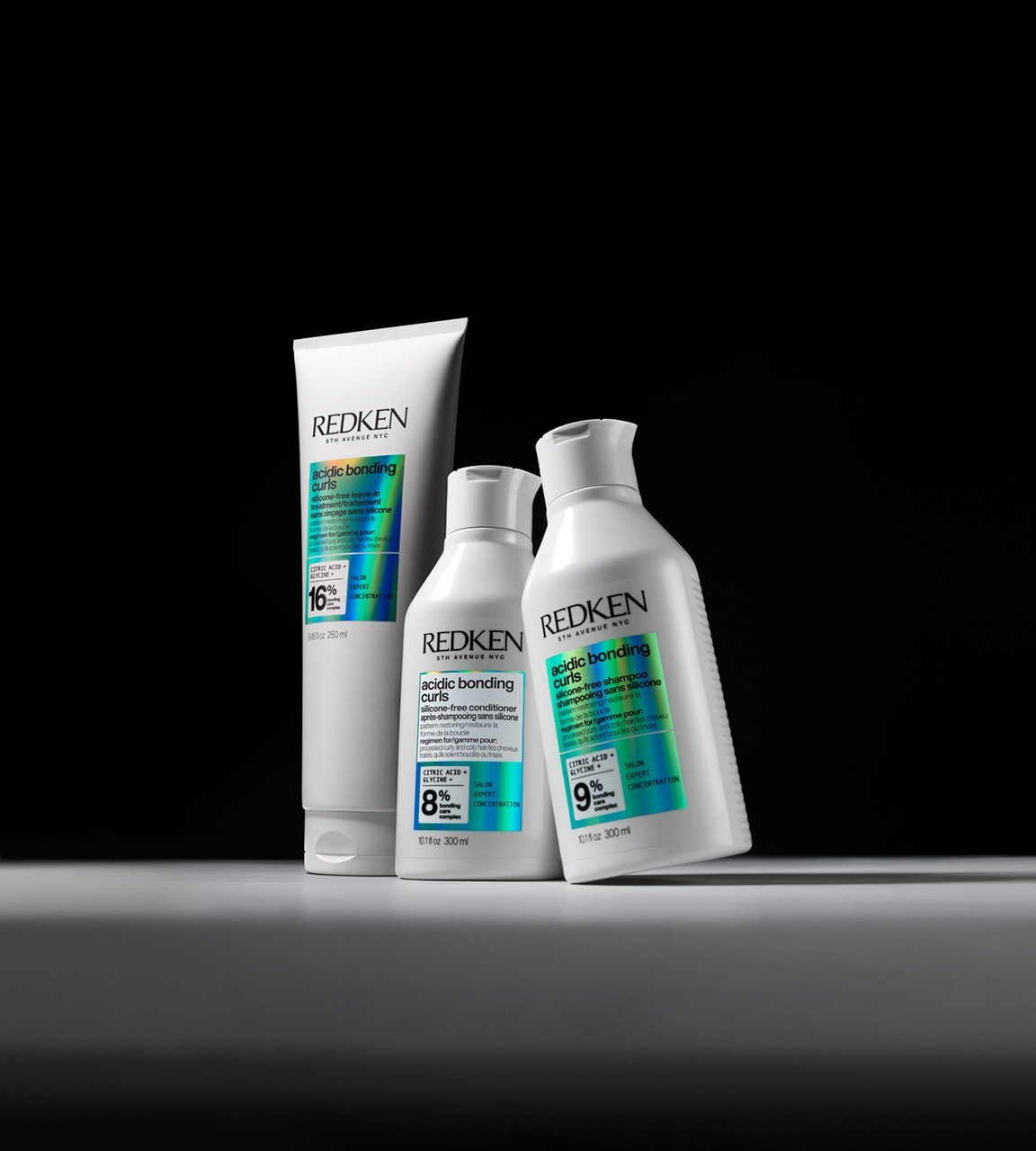
The Acidic Bonding Curls system layers bond repair with the moisture and oils curly and coily hair specifically requires. Each step contributes a different element of Redken Science: acidic pH at 4.5 to 5.5, protein and moisture.
- Cleanse with the sulfate-free Acidic Bonding Curls Shampoo, which is gentle enough for textured hair without stripping the natural oils that support curl definition, and reinforces weakened bonds while it cleanses.
- Condition and restore pattern with the silicone-free Acidic Bonding Curls Conditioner, which pairs citric acid with glycine and urea to repair bonds, rebuild the protein structure and add long-lasting hydration without weighing curls down.
- Define with the silicone-free Acidic Bonding Curls Leave-In Treatment, a leave-in treatment that works to provide heat protection, repair and hydration to damaged curls.
- Seal the ends with a thin layer of Hair Bandage Balm, which delivers 5x less breakage in 1 use1 and visibly seals up to 96% of damaged, dry split ends2 without flattening the curl pattern.
- Smooth flyaways with a few drops of All Soft Argan-6 Oil on damp or dry hair, which delivers 5x stronger hair3 and a finishing layer of shine.
1 Hair Bandage Balm, 5x less breakage: instrumental evaluation of split ends partially or completely closed with two applications vs. before application.
2 Hair Bandage Balm seal claim: instrumental evaluation vs. before application, 1 use.
3 All Soft Argan-6 Oil vs. non-conditioning shampoo.
Your Curly and Coily Wash Day Plan
Most curly and coily hair benefits from washing one to three times per week. Use the bonding shampoo and conditioner at every wash, and adjust the intensives based on damage level.
- Every wash: Acidic Bonding Curls Shampoo and Conditioner, a duo that helps restore processed, damaged curls.
- On damp (not dripping) hair: Acidic Bonding Curls Leave-In Treatment for moisture, definition and continued bond repair.
- On the ends: Hair Bandage Balm where damage and dryness concentrate.
- As a refresher or smoother: a few drops of All Soft Argan-6 Oil on damp or dry hair.
- Heavily damaged textures: add a weekly bond-building mask as an intensive treatment for the first four weeks.
Curly and coily hair responds quickly to the right bond repair routine and even faster to the wrong one. Pattern loss, limp spirals and breakage at the bend points are the signals that disulfide bonds have weakened inside the fiber. The Acidic Bonding Curls system reinforces those bonds while delivering the moisture and oils textured hair needs to coil cleanly, and a Redken-certified stylist can recommend how to layer the routine for your specific curl pattern and damage history.
When to Book a Professional Consultation
To discover more about bonding for curly and coily hair, schedule an appointment with a professional Redken hair stylist for a one-on-one consultation. Our professional hair stylists will offer tailored advice and expert tips on repairing curls and coils without losing the pattern.
Find a Redken salon near you to book a curl bonding consultation.
About Nívea Ferreira
Nívea Ferreira leads Global Brand Education for REDKEN, bringing nearly two decades of experience across professional beauty, innovation and education. As a hairstylist, she has built her career at the intersection of artistry, science and strategy, working with global brands to advance product innovation and professional expertise.