How to Manage Hair Breakage
IN THIS ARTICLE
What Is Hair Breakage — and What Causes It?
How to Identify Hair Breakage (vs. Normal Texture)
Common Habits That Make Hair Breakage Worse
How to Treat Hair Breakage at Home with Extreme Anti-Snap
When to See a Salon Pro for Hair Breakage
KEY TAKEAWAYS
- Hair breakage occurs when protein bonds are depleted due to chemical services (colour, highlights) or mechanical damage (heat styling, blow drying).
- Signs of breakage include "cotton candy hair" — frizzy, frayed strands, visible split ends, or small "balls" along the hair shaft where the strand is about to snap.
- Never pull split ends apart — it weakens the hair fiber and leads to further damage.
- Adding heat to already broken hair may offer a cosmetic fix, but ultimately makes breakage worse by drying out the strand.
- Prioritize protein before moisture — fix compromised bonds first before applying heavy conditioners or rich treatments.
- Redken Extreme Anti-Snap Leave-In Treatment, used as a system with Extreme Shampoo and Conditioner, delivers a 73% decrease in breakage for stronger, more resilient hair.
- Recovery from hair breakage takes patience — in some cases, a haircut to remove damage is the best first step before rebuilding.
What Is Hair Breakage — and What Causes It?
Your hair can actually break — and it's more common than you think. According to Redken Artist Adina Doss, hair breakage occurs when the hair's internal structure is compromised. Specifically, when the proteins within the strand are weakened or depleted — whether from chemical services like colour and highlights, or mechanical damage from heat styling and blow drying — the hair loses its structural integrity and begins to break.
Hair breakage and hair loss are not the same thing. Hair loss originates at the root. Breakage happens along the hair shaft itself, and it shows up in ways you can see and feel.
How to Identify Hair Breakage
Not sure if what you're seeing is breakage or just texture? Redken Artist Julie Lahr has a way of describing it that makes it easy to recognize: "A distressed strand of hair will look — well, I always call it cotton candy hair. It looks frayed and flyaway, or like split ends. When you can see them split apart, it's a fuzziness that doesn't go away." Doss adds that some clients mistake texture for breakage.
Here's what to actually look for: a visible unevenness along the strand, a small knot or "ball" in the middle of an individual hair (that's the point where it will break), or a single strand that has visibly split into two at the tip. These are the real signs of hair breakage — not just a bad hair day.
Common Habits That Make Hair Breakage Worse
Many everyday habits contribute to hair breakage, often without you even realizing it. The biggest offender? Pulling split ends apart. It might feel satisfying in the moment, but it causes real damage. "Pulling on a split end is just weakening the hair fiber itself," says Doss. "And adding heat will definitely make it worse, not better. It may cosmetically look a little better with heat, but the end result is that it dries out the hair and does more damage."
To stop breakage from progressing, avoid: pulling or splitting strands apart manually, applying high heat to already-damaged hair without protection, and overloading broken hair with heavy conditioners before repairing protein bonds first.
How to Treat Hair Breakage at Home with Extreme Anti-Snap
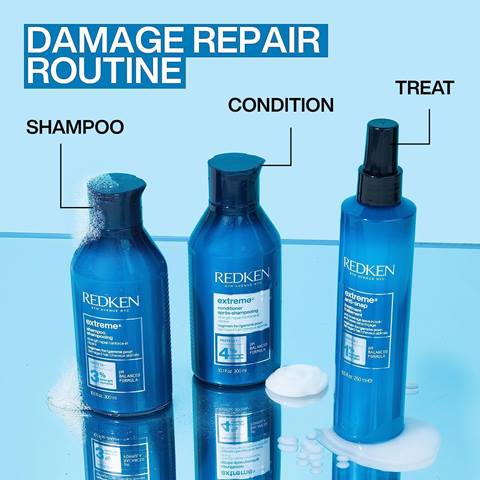
When breakage is caused by depleted protein bonds — which is especially common with colour-treated or highlighted hair — the fix starts with protein, not moisture. "It's important not to overload damaged hair with conditioners or heavy products," says Lahr. "Fix the hair first — strengthen and fortify before adding moisture."
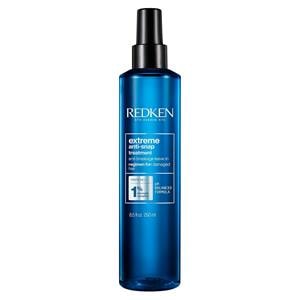
That's exactly what Redken Extreme Anti-Snap Leave-In Treatment is formulated to do. Powered by a 1% Strength Complex — a blend of protein, keratin, and amino acids — it reinforces weakened hair fibers and helps restore resilience from within. When used as a complete system with Redken Extreme Shampoo and Conditioner, Extreme Anti-Snap delivers a clinically proven 73% decrease in breakage for hair that's visibly stronger and more resistant to damage.
How to use it:
- Apply Extreme Anti-Snap to towel-dried hair after washing.
- Work it through the lengths and ends.
- Style as usual — no rinsing needed.
When to See a Salon Pro for Hair Breakage
At-home protein treatments go a long way — but severe breakage, particularly from chemical services, may require professional intervention first. Talk to your stylist about the integrity of your hair and what it needs. In some cases, a haircut to remove the most damaged sections is the smartest first step before beginning any rebuilding regimen.
In-salon treatments like Redken Extreme CAT can also deliver an additional layer of repair that goes beyond what's achievable at home. As Doss puts it: patience is key. But coming back from hair breakage — stronger, healthier, and more resilient — is absolutely possible.