
Growing Out Damaged Hair
In this article:
- Why Does Damaged Hair Seem to Stop Growing?
- What Is the Difference Between Bond Repair and Deep Conditioning?
- What Routine Helps You Retain Length While Growing Out Damaged Hair?
- How Should You Adjust the Routine for Fine, Thick or Porous Hair?
- How Should You Trim Hair While Growing It Out?
- Which Habits Cause Breakage While You Grow Out Damaged Hair?
- Damaged hair doesn't stop growing; it breaks. Bond damage from chemical processing and heat weakens the hair shaft, causing strands to snap before they reach the length you want.
- Deep conditioning smooths the surface, while bond repair helps rebuild the internal structure, so real length retention needs both, with bond-building as the priority.
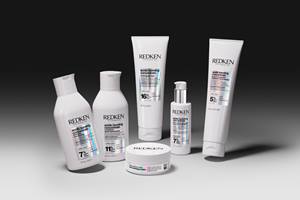
- A four-step Acidic Bonding Concentrate routine (shampoo, conditioner, heat-protecting leave-in and Hair Bandage Balm) helps reduce breakage and mend split ends.
- Every hair type follows the same steps, but fine hair needs lighter, ends-focused application and porous or processed hair needs the most consistent bond repair.
- Micro-dusting removes only the very tips of split ends, so you can stop splits from traveling up the shaft without sacrificing meaningful length.
Quick Answer
Growing out damaged hair is less about speeding up growth and more about stopping breakage. Damaged hair keeps growing at the root but snaps at the ends, so retaining length depends on a bond-repair routine, heat protection, gentle handling and micro-dusting trims that remove split ends without sacrificing length.
If your hair feels stuck at the same length no matter how long you wait between trims, the problem usually isn't your growth rate. It's breakage. Damaged hair doesn't stop growing at the root; it snaps before it reaches the length you're working toward.
The good news is that breakage can be managed. Below, we explain why damaged hair seems to stall, how bond repair differs from deep conditioning, and the routine and trim strategy that help you finally hold on to your length.
Why Does Damaged Hair Seem to Stop Growing?
Damaged hair seems to stop growing because the ends break off as fast as new length grows in. Chemical processing, heat styling and everyday friction weaken the internal bonds that hold each hair strand together. As these bonds break down, hair becomes more porous, more brittle and more prone to breakage, especially at the ends.
The result feels like stalled growth, but it's actually strand loss from breakage, not a change in what's happening at the scalp. For more ways to reduce snapping, see our guide on how to manage hair breakage.
What Is the Difference Between Bond Repair and Deep Conditioning?
Deep conditioning works on the outside of the hair, while bond repair works on the inside. Both help, but they solve different problems:
| Deep conditioning | Bond repair | |
|---|---|---|
| Where it works | The hair's outer surface | The cuticle and cortex |
| What it does | Adds softness and shine while reducing friction between strands | Helps recreate the internal network of hydrogen and salt bonds to fortify hair from within |
| Role in length retention | Reduces daily friction | Reduces breakage at the source |
Bond-building formulas with Citric Acid, like Acidic Bonding Concentrate, penetrate the cuticle and cortex rather than simply coating the surface. For real length retention, hair needs both: surface smoothing to reduce daily friction, and internal bond repair as the non-negotiable priority. For a deeper look at the difference, read Strengthening vs. Repairing Hair.
What Routine Helps You Retain Length While Growing Out Damaged Hair?
A length-retention routine for damaged hair has four steps: cleanse, condition, protect and treat the ends.
- Cleanse: Use Acidic Bonding Concentrate Shampoo, formulated with a 7% Bonding Care Complex and Citric Acid, to fortify hair from the first step.
- Condition: Follow with Acidic Bonding Concentrate Conditioner, with an 11% Bonding Care Complex, to continue reinforcing bonds after cleansing.
- Leave-In Treatment: Apply Acidic Perfecting Concentrate Leave-In Treatment, with heat protection up to 450°F/230°C, to guard against thermal breakage between washes.
- Treat Damaged Hair Ends: Finish with Acidic Bonding Concentrate Hair Bandage Balm. Targeted at hair ends, it visibly seals up to 96% of damaged, dry split ends in just two applications.
How Should You Adjust the Routine for Fine, Thick or Porous Hair?
The four steps stay the same for every hair type; what changes is where and how much product you apply.
- Fine hair: Focus the conditioner, leave-in and Hair Bandage Balm on the mid-lengths and ends, where breakage happens, and use a small amount so the roots stay light.
- Thick hair: Work in sections so the shampoo, conditioner and leave-in reach every strand, not just the outer layer.
- Highly porous or chemically processed hair: Porosity rises as bonds break down, so this hair benefits most from consistent bond repair. Never skip the heat-protecting leave-in, and reapply the Hair Bandage Balm to the ends where damage is greatest.
Not sure which category your hair falls into? A Redken stylist can assess your hair and fine-tune the routine for you.
How Should You Trim Hair While Growing It Out?
The smartest way to trim while growing out damaged hair is micro-dusting: trimming only the very tips of split or damaged ends. Micro-dusting helps remove split ends before they travel up the shaft, without sacrificing meaningful length.
Pairing regular micro-dusting with a bond-repair routine addresses damage from both ends: at the strand level internally, and at the tip externally. Learn to spot which kind of split you are dealing with in Split Ends Explained: Understanding the Different Types.
Which Habits Cause Breakage While You Grow Out Damaged Hair?
The habits that cause the most breakage are the same forces that weaken bonds in the first place: chemical processing, heat styling and everyday friction.
- Unprotected heat styling: Always apply a heat-protecting leave-in before using hot tools.
- Frequent chemical services: Each service adds bond damage, so pair any processing with a consistent bonding routine.
- Everyday friction: Daily rubbing and tension wear down the surface of the strand; conditioning helps reduce friction between strands.
Ready to break the grow-and-trim cycle? Explore the full Acidic Bonding Concentrate system, or start with our complete guide on how to fix damaged hair.


